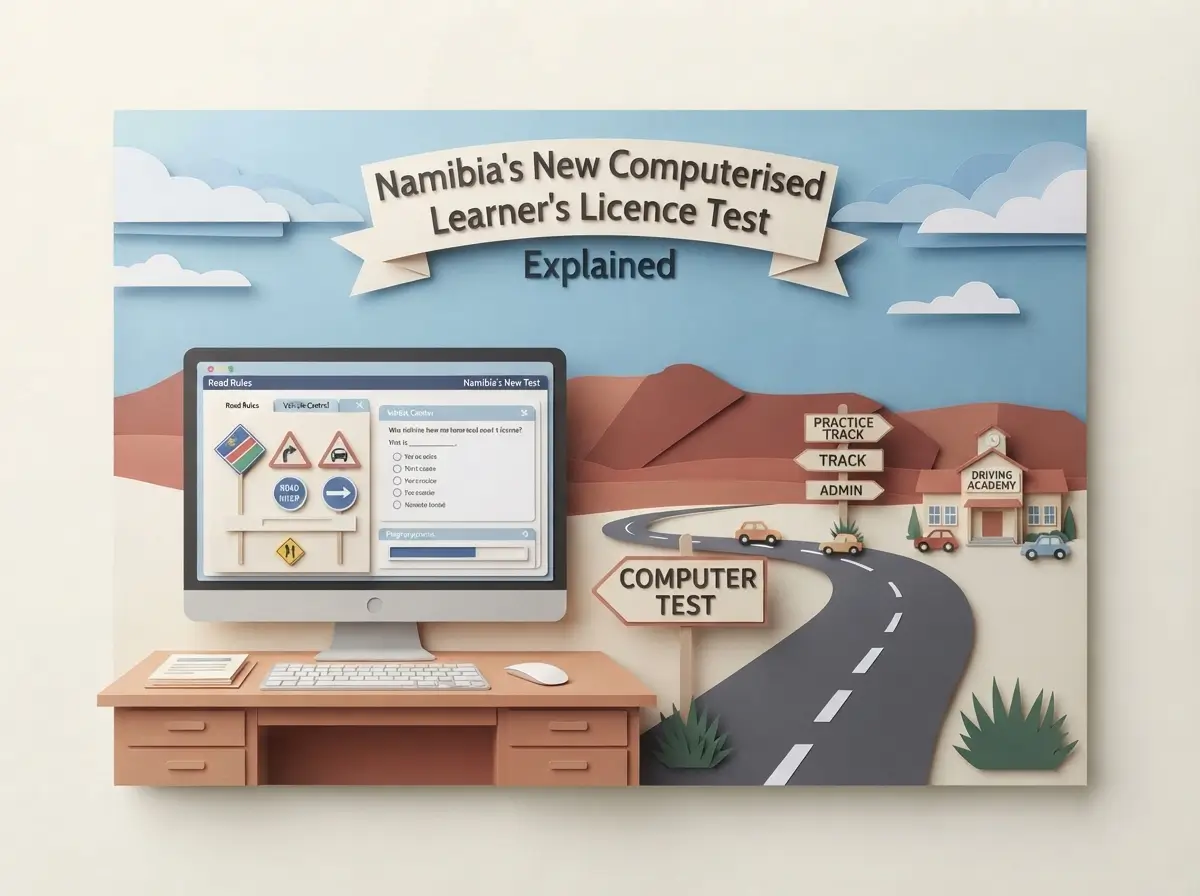
Namibia's New Computerised Learner's Licence Test Explained
On 8 June 2026, The Ministry of Works and Transport launched a new computerised learner's-licence testing method together with a Book and Pay system at the Okahandja NaTIS Centre. New Era Live
The change is part of a wider effort to modernise Namibia's driver-testing system.
What changed?
Traditionally, Namibia's learner's licence process has relied on written theory testing.
The new system introduces computerised testing, which the government says will help standardise tests, improve security, provide immediate results and increase testing capacity. New Era Live
At the Okahandja launch, the centre was initially expected to operate four testing sessions per day with capacity for 18 applicants in each session. Informante
Does this mean every NaTIS centre now uses computers?
Not necessarily.
The June announcement concerned the launch at Okahandja NaTIS, with the system intended for wider national rollout according to Informante
Applicants elsewhere in Namibia should therefore confirm the current testing method with their NaTIS centre rather than assuming their centre has already changed.
Has what you need to study changed?
The underlying knowledge requirements remain important.
Namibia's Road Traffic and Transport Regulations require learner applicants to demonstrate knowledge and understanding of:
- rules of the road;
- road traffic signs; and
- vehicle controls relevant to their vehicle class
So moving from paper to computer doesn't remove the need to understand the actual driving rules.
What does the Book and Pay system mean?
The Book and Pay system is intended to make appointment management and payment more structured as Namibia digitises NaTIS services.
NaTIS already provides an official online portal offering booking for Learner's Licence Tests and Driving Licence Tests.
How should learners prepare?
The testing technology may be changing, but your preparation strategy shouldn't revolve around memorising the appearance of an old paper.
Focus on the underlying concepts:
Road signs → Road rules → Vehicle controls → Practice questions → Review your weak areas.
That approach prepares you for the knowledge being tested regardless of whether the questions appear on paper or a computer.